Total Surround
Visibility
A refuse truck has blind zones a mirror cannot cover, and a collection route fills them with people, carts and parked cars. Four wide-angle cameras stitch into one live top-down view, so the driver sees the whole truck at once.
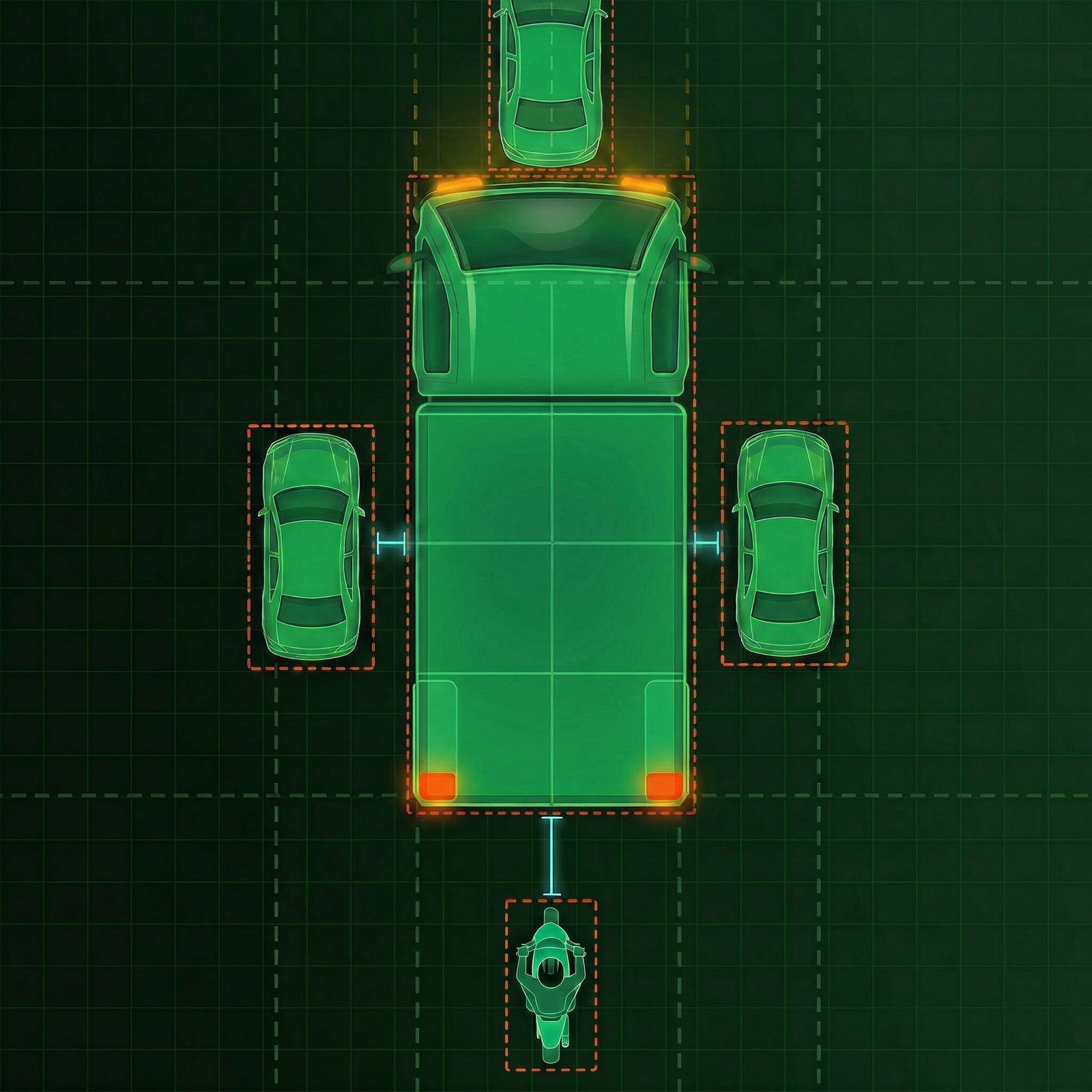
Four Cameras. One Seamless View.
Wide-Angle Cameras
Mount at front, rear, and both sides.
Image Stitching
Feeds stitch into a real-time top-down view.
Live Updates
Real-time view as the vehicle moves.
Auto View Switching
Switches to rear/side when reversing or signaling.
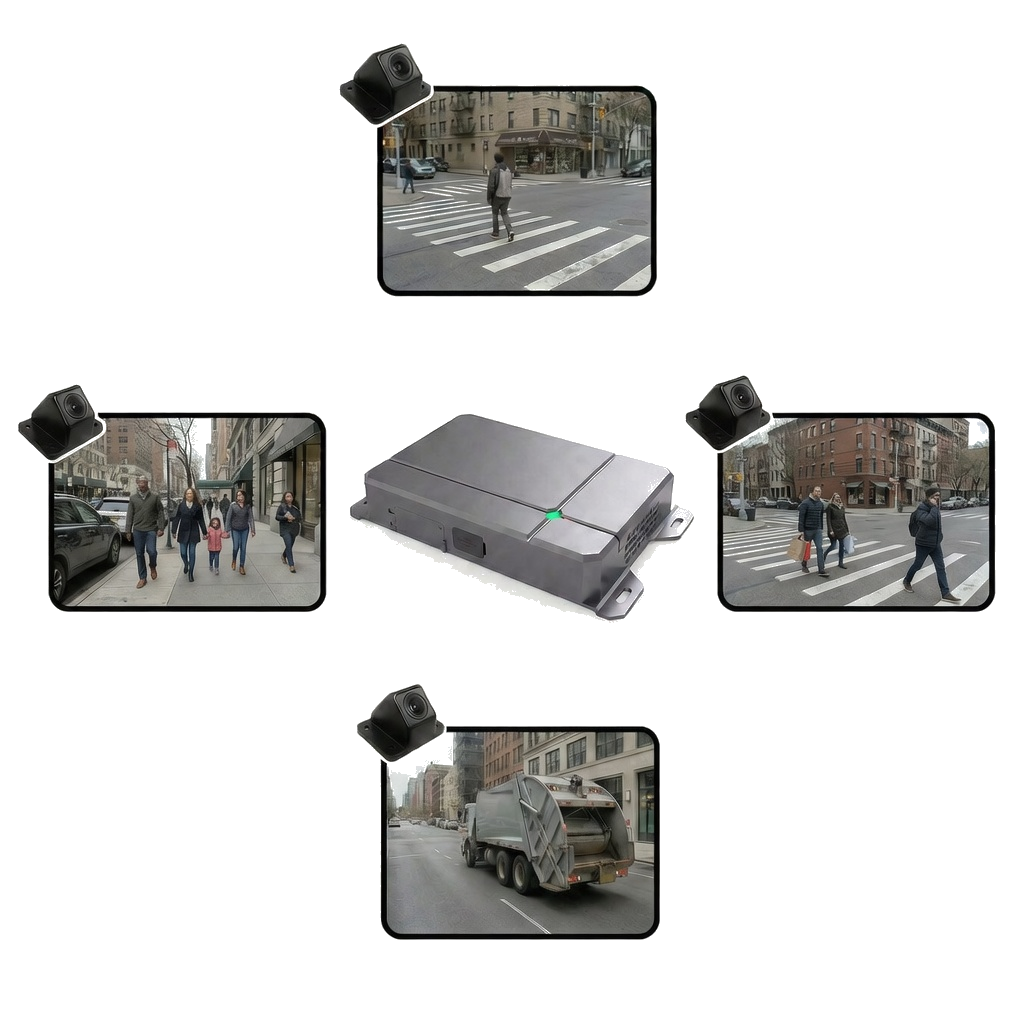
Full 360° Surround Coverage
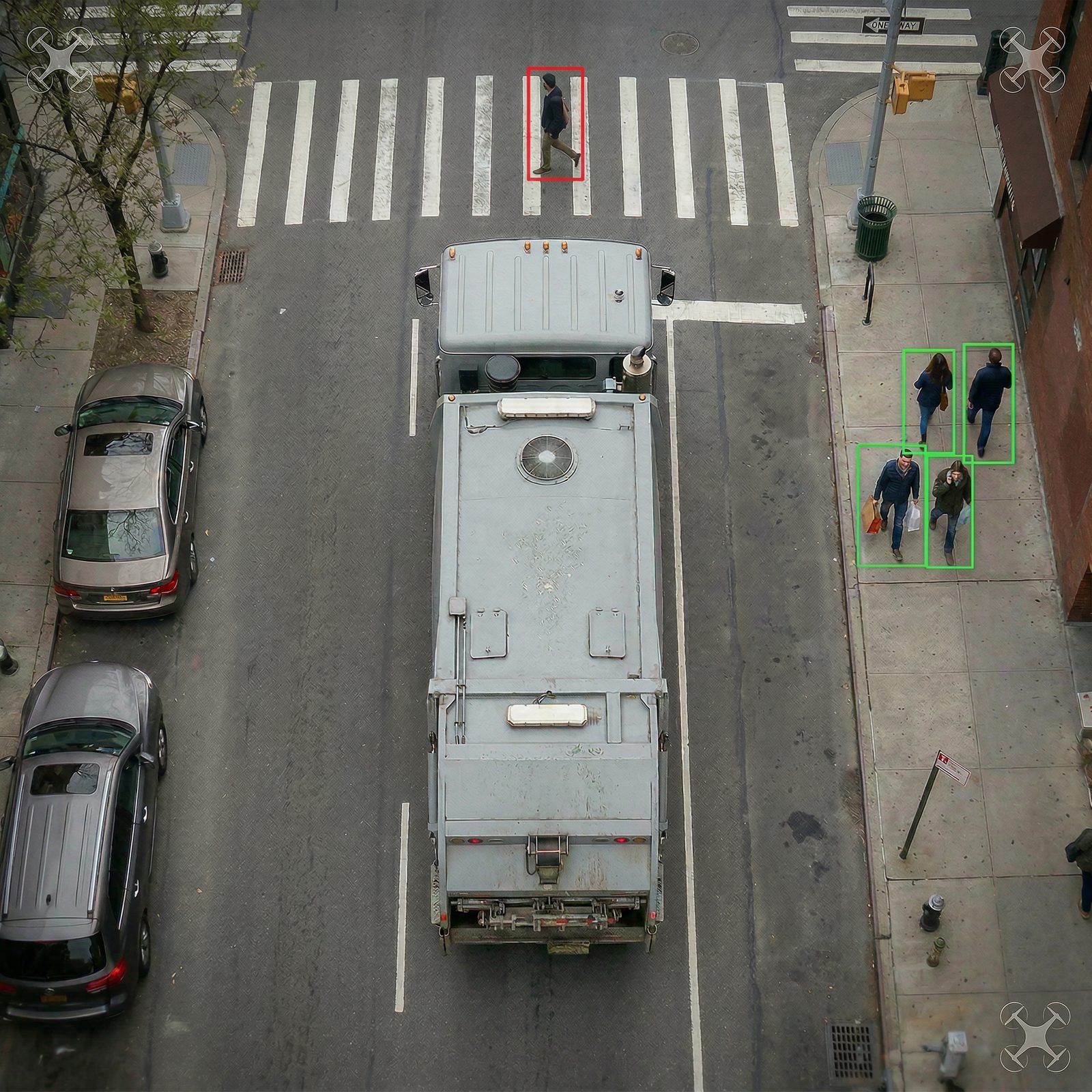
Built-in Pedestrian Detection
Built for the Collection Route
Built for refuse chassis — rugged enough for constant vibration, hundreds of stops a day and a body that changes shape as it loads. Works directly with the WasteVision MDVR platform.
Real-Time Bird's Eye View
Four wide-angle cameras stitch into a seamless top-down perspective, updated live as the truck moves. At a curbside stop the driver checks one screen instead of four mirrors — and sees the cart, the helper and the parked car in the same glance.
Auto View Switching
Switches to the rear view the moment the truck goes into reverse and to the side view when signaling. On a route with hundreds of reversals a day, that is hundreds of decisions the driver does not have to make.
AI Pedestrian Detection
Integrated AI picks out people and cyclists anywhere in the surround zone — the resident wheeling a cart out, the helper stepping down, the child cutting behind the truck — and warns the driver visually and audibly before the truck moves.
In-Cab Monitor Display
A dedicated in-cab monitor carries the stitched view at full clarity. Split-screen holds the bird's eye and a single camera side by side, so the driver can watch the hopper and the curb at the same time.
Where 360° Makes the Difference
Curbside Collection Routes
Residential streets narrow to a single lane once both sides are parked, and the truck stops every few hundred feet. The top-down view shows the clearance on both sides at once, which is the difference between easing past a parked car and filing a claim on its mirror.
Pedestrian & Worker Safety
Collection overlaps with the school run, and the people closest to the truck are often the ones the driver can least afford to miss — helpers working on the ground, residents at the cart, children on the sidewalk. Surround visibility covers the zone where all three stand.
Backing into Transfer Stations
Tipping means backing a loaded truck into a bay it barely fits, alongside other trucks doing the same thing, usually with a spotter who may or may not be where the driver expects. The rear view comes up automatically and the top-down view shows both walls.
Roll-Off & Commercial Routes
Roll-off work happens in places nobody designed for a truck: active construction sites, tight commercial lots, compactor pads hemmed in by parked vehicles. The stitched view shows what is behind and beside the truck during the placement, not after it.
Works with Your Existing WasteVision MDVR
The 360° Bird's Eye module connects directly to the 6-channel or 8-channel MDVR — no additional recorders required. All surround video is recorded, stored, and accessible through the Cloud Platform.

Plug & Play
Connects directly to MDVR via dedicated camera inputs. No additional hardware or recorders needed.
Cloud-Recorded
All 360° video is recorded to the MDVR and uploaded to the Cloud Platform — available for review, evidence, and coaching.
Auto-Calibration
Cameras auto-calibrate after installation — reducing setup time and ensuring consistent stitching quality across your fleet.
The Ground Around a Refuse Truck
Collection is one of the most dangerous jobs in the country, and a quarter of the industry’s injuries happen while the truck is reversing. Surround view is aimed squarely at that.
Of all injuries and accidents in solid waste collection involve backing
Worker deaths per 100,000 — the 5th deadliest occupation in the U.S. in 2024
Of the ground around the truck on one screen, updated live as it moves
Recorded surround video for claims, evidence and coaching
Sources: SWANA, Backing Best Management Practices; U.S. Bureau of Labor Statistics, Census of Fatal Occupational Injuries, 2024 (refuse and recyclable material collectors). Industry figures describe the risk this system addresses, not results attributed to it.