Roll-Off Logistics.Visualize Your Field Operations.
Every container you own on one live map — so dispatch knows where each can is, which one just went on the hook, and which ones have been sitting long enough to have stopped earning.
Lost productivity across hauling operations from inefficient routing and unused assets
3–5%
Of annual hauler revenue consumed by billing disputes
$5K–$7.2K
To replace a single roll-off container
$150–$400
Typical loss of revenue when a driver delivers or picks up the wrong roll-off
The Problem
Your Most Expensive Assets Are the Ones Nobody Can Find.
A roll-off fleet is millions of dollars of steel scattered across a service area, tracked on a whiteboard and in drivers’ heads. The gaps are where the money goes.
Containers Nobody Can Locate
A can gets moved on-site, dropped at the wrong address, or simply forgotten. It stops earning, and eventually it gets replaced — at the price of a new one.
The Wrong Can Gets Hooked
Two cans on one job site, one goes on the truck. Now a full container is dumped early, an empty one is hauled, and the customer that needed a swap still has theirs.
Supply Guessed, Not Known
Dispatch commits to tomorrow’s deliveries without knowing how many 30s are actually free today. You either turn away work or buy steel you did not need.
Contracts Untied From Steel
Rental days accrue on a container no one has confirmed is still there. Disputes get settled from memory, which means they get settled in the customer’s favor.
Bin Location
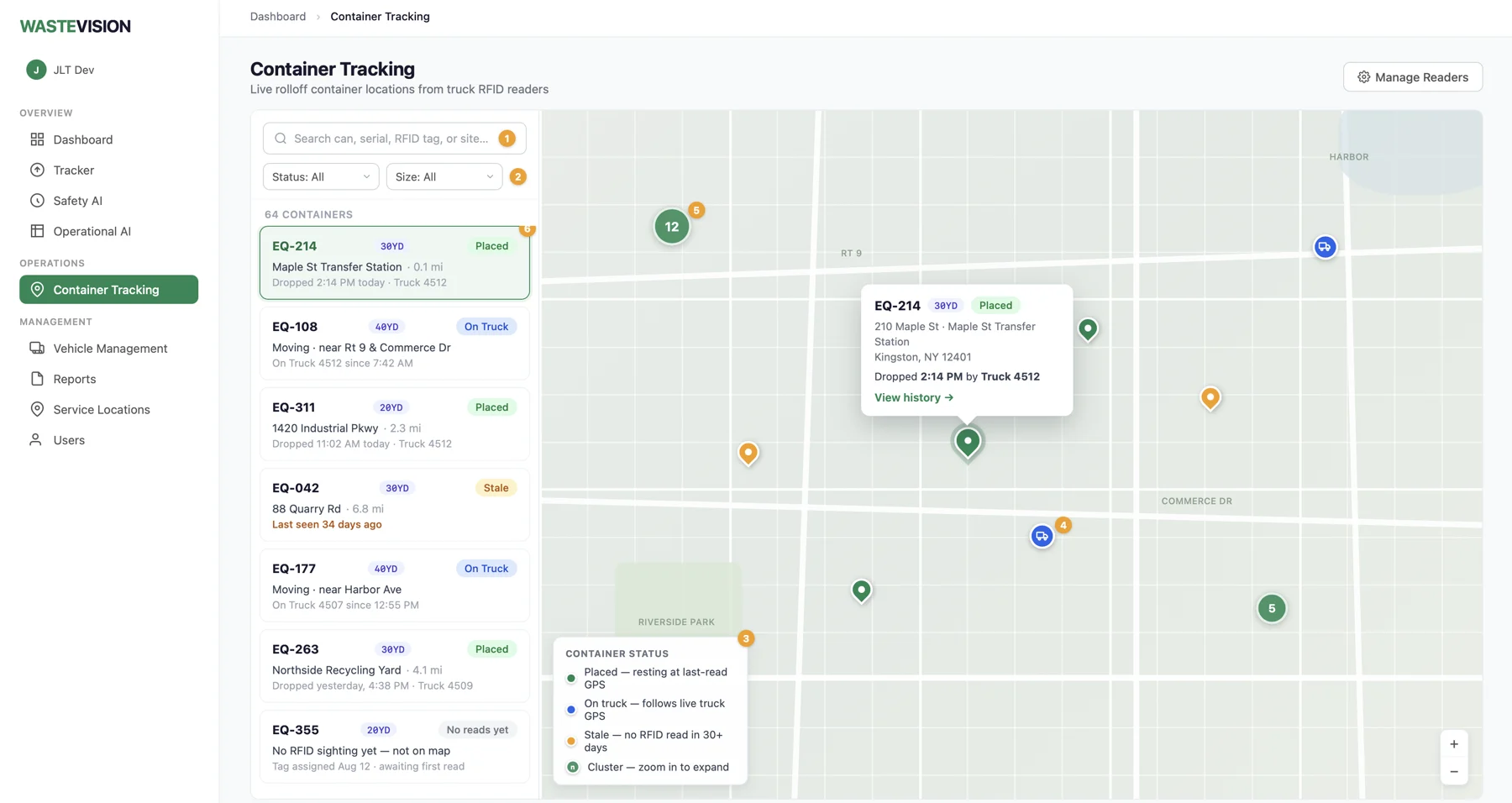
Every Container on One Map. Live.
The fleet reports itself. No driver taps, no paperwork, nothing anyone has to remember to do at the end of a long day. Dispatch sees what is placed, what is riding on a truck right now, and what has gone quiet.
Every can carries a status, and the one that pays for the system is Stale — a container that has gone quiet long enough to have stopped earning. Those are the ones a hauler replaces without ever realizing they still owned them.
Yard-Out to Field-PlacedLive On-Truck PositionsStale Asset FlaggingSearch by Can, Serial or RFID Tag
Tracking History
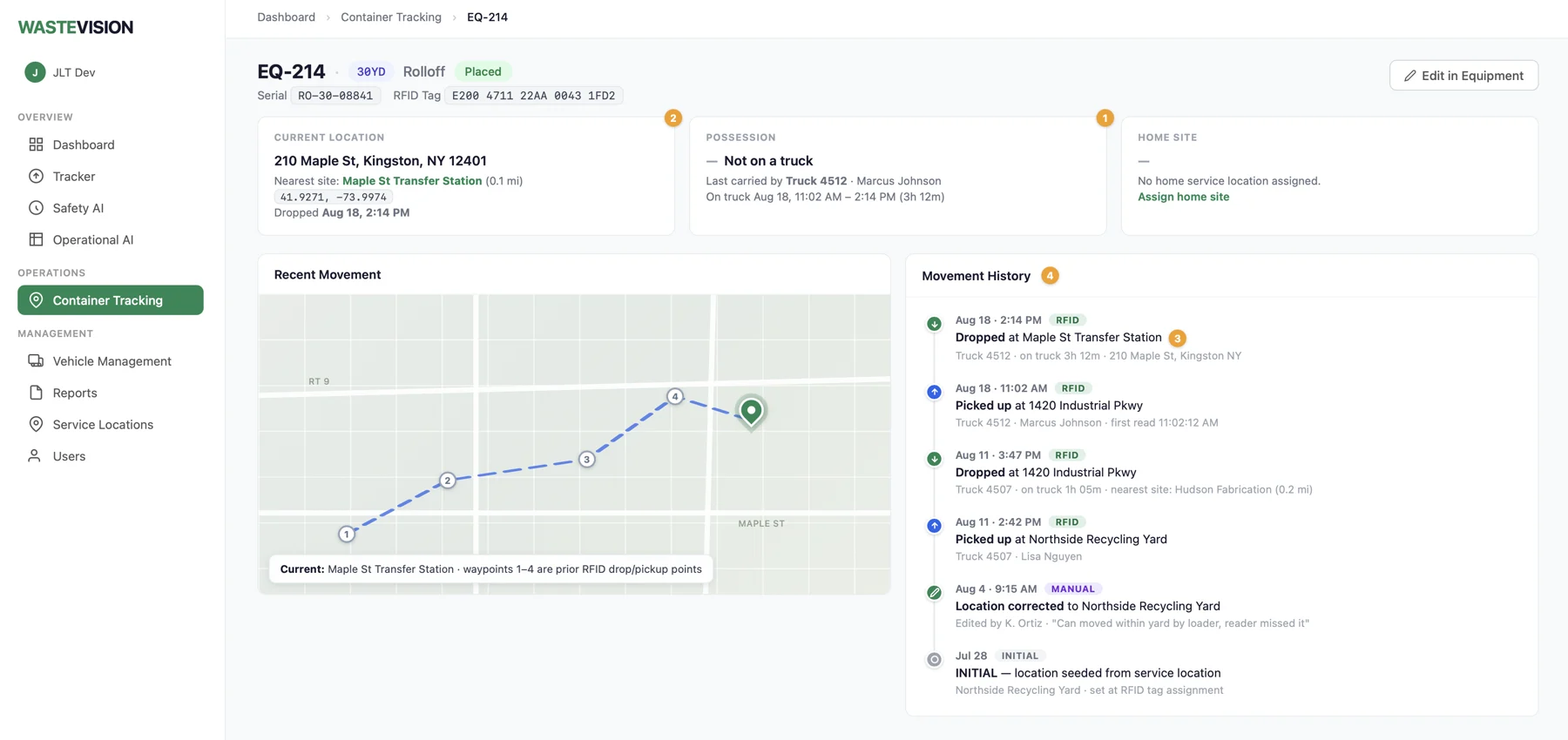
Where It Has Been, and How Long It Sat.
Open any container and the whole life of that asset is there — every pick-up and drop with the truck, the driver, the address and the timestamp. Drop-offs carry the image, the geo-coordinates and the time, which is what turns “we delivered it” into proof.
Possession is tracked as well as position — who last carried it, on which truck, and for how long. Corrections stay visible in the record, so an edited history is still an honest one when a dispute turns on it.
Dated Movement HistoryGeo-Tagged Drop-Off ProofDays-on-Site vs. Contract TermTruck & Driver Possession Trail
Pick-up Error Notifications
Caught Before the Truck Leaves the Lot.
If the can on the truck is not the can the work order called for, you find out while the driver is still on site — not a week later, when the customer calls to ask where their container went.
A wrong can is never a small error. The customer who needed a swap still has theirs, a full container gets dumped early, and an empty one rides back to the yard. Catching it on site costs a few minutes; catching it later costs a return trip.
Wrong-Can DetectionWrong-Size PreventionDriver & Dispatch AlertedFixed On Site, Not Next Week
Inventory Control & Planning
Commit to Tomorrow on Numbers, Not a Guess.
Supply stops being a question. See the fleet by size and state — free in the yard, placed and earning, or sitting stale — set against what has already been promised for the week ahead.
Available by Size, LiveStale Asset RecoverySupply vs. Booked DemandBuy Steel Only When You Need It
Figures cited above: lost productivity and billing-dispute shares reported by the SWANA Applied Research
Foundation and Waste Today, as compiled by
Geoforce;
container purchase pricing from
Thompson Fabrication.
Revenue loss per wrong-container event is WasteVision’s own operational estimate.
Ready to See Every Container You Own?
See how RFID container tracking puts your roll-off fleet on one map, stops the wrong can going on the hook, and tells you what is actually available before you commit to tomorrow.
 WasteVision AI — Roll-Off Logistics