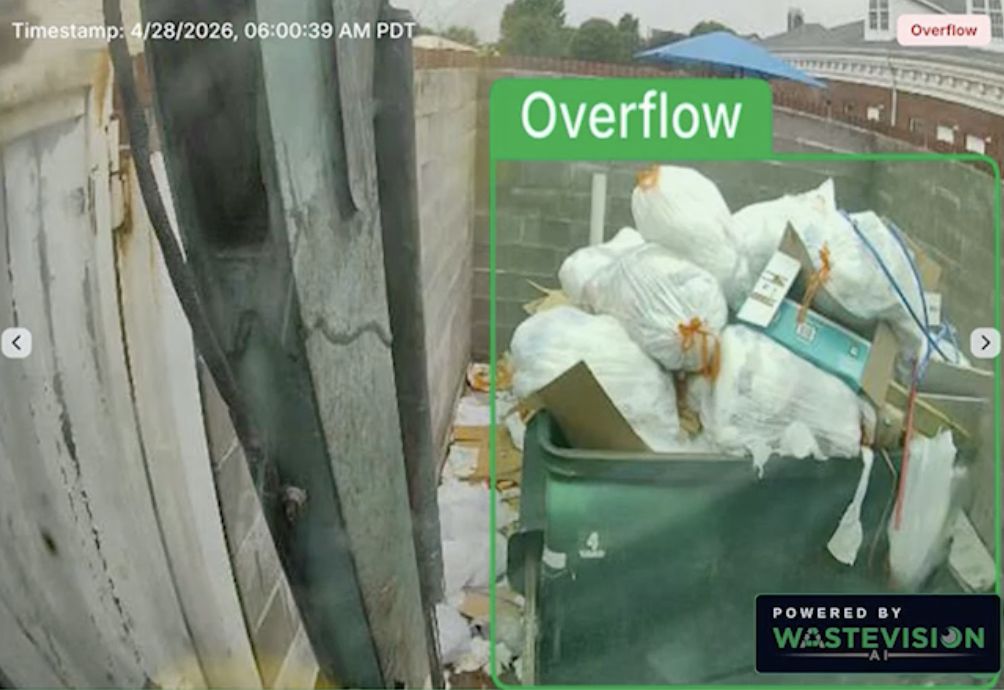
AI overflow detection uses the cameras already on a front-load truck to spot overflowing containers at every lift, grade how full they are, and attach a timestamped, GPS-tagged photo to the customer's account. Haulers can then bill overflow charges they currently miss, with proof strong enough that customers rarely dispute them.
Key takeaways
- Manual, driver-reported overflow programs capture only a small fraction of billable overflow. One hauler was billing fewer than 1% of overflowing bins.
- AI flags overflow automatically at every lift and attaches photo proof, so drivers stay on schedule and charges hold up.
- Most fleets can expect $2,500–$5,000 in additional EBITDA per truck per month, and most programs launch in 2–4 weeks.
In one WasteVision AI deployment, a regional hauler went from billing fewer than 1% of overflowing bins to generating more than $1 million in additional EBITDA.
Why do haulers miss so many overflow charges?
Overflowing containers are common on commercial routes. Billing them depends on the driver noticing, stopping, taking a photo and logging it, and all of that competes with staying on schedule. Most drivers, understandably, keep moving.
The result is a gap between the overflow that happens and the overflow that gets billed. When WasteVision AI started working with an East Coast commercial hauler, it was billing for fewer than 1% of its overflowing bins using manual driver documentation.
“We have worked with several haulers who previously created bounty programs that pay their drivers for each overflow photo they take. We have found that even monetary incentives do not motivate most drivers to stick with bounty programs.”
Barry Saunders, President, WasteVision AI
How does AI overflow detection work?
WasteVision AI's overflow detection runs in the background on every pickup. The driver doesn't have to do anything:
- Capture: Cameras on the truck record each container as it's serviced.
- Detect: AI reviews the images and flags containers that are overflowing, along with how severe the overflow is.
- Document: Each event is saved with a photo, timestamp, GPS location and customer account.
- Review and bill: Events appear in the cloud dashboard, where billing or customer service staff approve the charge and send it to the billing system.
Because the detection is consistent, every customer is held to the same standard. That makes the charges easier to defend and fairer to customers.
How much revenue does missed overflow represent?
More than most haulers expect. Across the East Coast hauler's front-end loader fleet in Washington, DC, WasteVision AI found:
An 8–12% overflow rate means roughly one in every ten commercial lifts could carry an extra charge. Across thousands of lifts a week, even a modest overflow fee adds up quickly. Almost all of that revenue drops straight to the bottom line, because the truck was already there doing the work.
The hauler reached $1 million in additional revenue in 11 months. Results vary with fleet size, but most fleets can expect an additional $2,500–$5,000 in EBITDA per truck per month.
Will customers dispute AI-documented overflow charges?
Far less often, because the proof is attached. Commercial customers are increasingly told to push back on overflow charges that arrive without evidence. One national waste consultancy advises businesses to “request photographic proof before accepting overage fees as valid,” and notes that charges often “appear without prior notification or photographs.”
A photo of the overflowing container, with the date, time and location, answers that request before it's made. It also changes the customer service call: instead of a debate, the rep can share the image and, where it makes sense, suggest a larger container or more frequent service.
“It is rare that customers will dispute overflow charges, as the evidence is documented and hard to deny.”
Barry Saunders, President, WasteVision AI
Does overflow detection only help billing?
No. The same data helps in several other ways:
- Right-sizing service: Customers who overflow week after week need a bigger container or more pickups. That's an upsell backed by evidence.
- Route planning: Chronic overflow points to accounts that take longer to service.
- Site cleanliness: Overflow leads to litter and complaints from property managers and cities. Catching it early protects the relationship.
- Contract renewals: A photo-verified service history gives account managers facts to work with at renewal time.
What do haulers need to get started?
Less than most expect. WasteVision AI works with cameras on the truck to turn existing video into operational data, so haulers don't need to rebuild their fleet or retrain drivers. A typical rollout includes:
- Confirming camera coverage on the front-load trucks you want to start with
- Connecting customer accounts so each event is matched to the right customer
- Setting your overflow policy and fee rules
- Training billing and customer service staff on the dashboard
“Each hauler operation is different; however, most haulers can implement an overflow program in 2–4 weeks. Haulers who already have a manual program can be up and running in less than a week.”
Barry Saunders, President, WasteVision AI
Frequently asked questions
What is AI overflow detection in waste collection?
It's software that analyzes truck camera images at each pickup to identify overflowing containers, grade the severity, and record a photo with the time, GPS location and customer account for billing.
How common are overflowing commercial containers?
In WasteVision AI's East Coast deployment, 8–12% of front-load services involved an overflowing container.
Do drivers have to take photos?
No. The cameras and AI capture and flag overflow automatically, so drivers can stay on schedule.
Can overflow data help sell larger containers?
Yes. A photo record of repeated overflow is clear evidence that a customer needs more capacity or more frequent service.
What kind of results have haulers seen?
One regional hauler generated more than $1 million in additional EBITDA and flagged over 25,000 overflow events after deploying WasteVision AI across its front-end loader fleet.
See how much overflow revenue your fleet is missing
WasteVision AI helps haulers capture overflow revenue, prove service and improve safety using cameras they already rely on. Request a demo to see overflow detection on your own routes, or read the full case study.
Sources
- WasteVision AI, Case Study: East Coast Hauler (Overflow Detection)
- National Waste Associates, Overage & Overfill Fees: How Hidden Costs Drain Your Budget